The white-knuckled work of marine salvagers: Bounty hunters of the sea
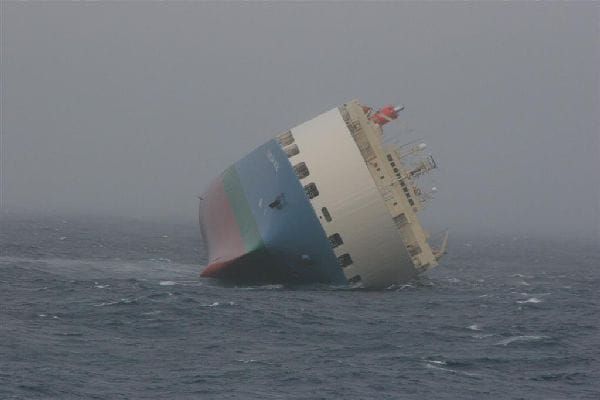
$100 million worth of treasure sits locked inside a sinking ship, and under maritime law, a piece of the prize is there for the taking, for anyone brave enough (or crazy enough) to try to save it before it slips away.
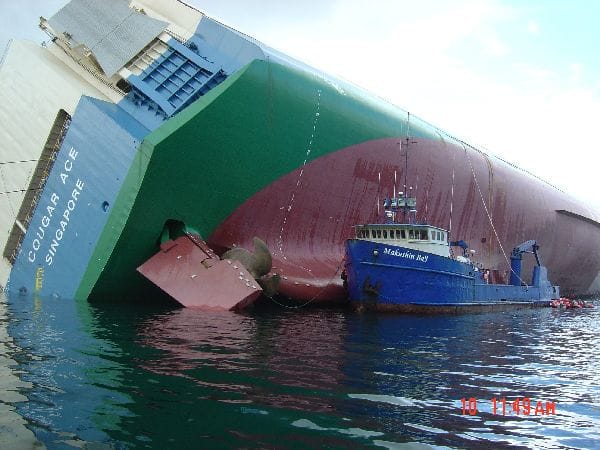
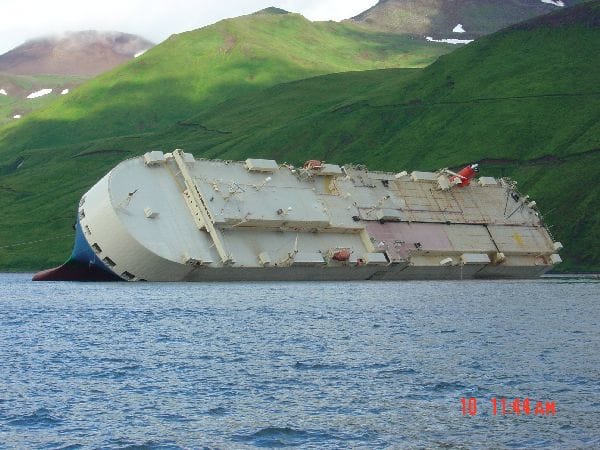
The crew of the cargo carrier Cougar Ace were en route from Japan to California in the summer of 2006. While near Alaska’s Aleutian Islands, a volcanic archipelago known for its harsh conditions (think, “Deadliest Catch”), the crew was transferring the ship’s ballast, when something went wrong, a mistake that severely impaired the vessel and caused it to start listing. The ship weighs 55,000-tons and stretches 654 feet in length (about 199 meters), meaning that if it were stood vertically, straight up, it would stand taller than Seattle’s Space Needle. Now on its side at a 60-degree angle, the ship founders in the cold waters of the North Pacific. If something isn’t done soon, it will take its “treasures” to the bottom of the sea floor, which are, namely, about 5,000 Mazda sedans.
Enter the salvagers. They work within a high-stakes, “winner take all” reward system, determined by the ancient rules of the sea. Marine law incentivizes the rescue of cargo in peril by granting successful salvagers the right to generous rewards, often including a cut of the cargo’s estimated value. If they can pull this off – a truly complex operation and risky feat of engineering – then they stand to win big, but if they fail, they get nothing, and the cost to enter this race isn’t cheap.
Wyoming isn’t the first place you’d expect to find a marine salvage master, but that’s where Captain Rich Habib called home, at Jackson Hole, nearly 700 miles inland as the crow flies from the Pacific shoreline. His company, TITAN Salvage (now part of Crowley), employed an international team of experts, including Swedish mechanic Hank Bergman, British diver Colin Trepte, and naval architect Marty Johnson, who made 3-D models of ships on-the-fly, a critical skill for this kind of work.
With the clock ticking, the team can assemble quickly to anywhere in the world, chartering planes and boats as they bring their own sophisticated equipment to the rescue. And perhaps a little like James Bond, they usually arrive at their client ship by helicopter or speedboat.
When they arrive at Cougar Ace, the salvagers are armed with ropes and headlamps, as they rappel down into the pitch-black interior of the wounded giant, which is now a claustrophobic steel labyrinth of dead ends and pitfalls. They dodge suffocating carbon dioxide blasts from the ship’s disabled fire prevention system, which can now make it impossible to breathe at times in parts of the ship. All while Johnson calculates how to pump out a thousand tons of trapped water without triggering a fatal “flop” that could capsize the vessel in a snap.
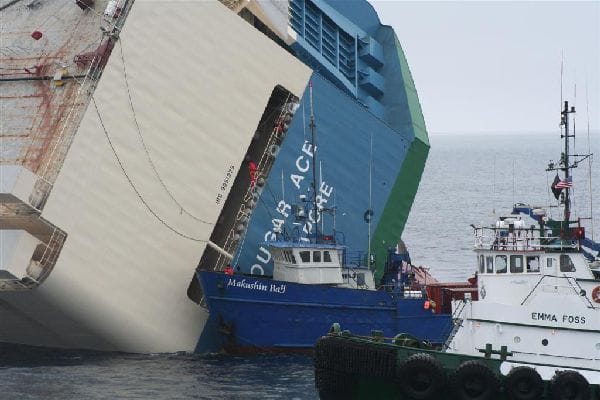
But salvage is a deadly gamble. In a split-second nightmare, Marty Johnson slips on the slick deck, and falls 80 feet to his death. Staring up at the massive hull, the remaining crew faced the ultimate test of grit: save their lives by cutting their losses and abandoning the ghost ship, or risk everything to finish the job. Defying the odds, the team eventually rights the listing ship, thanks to pumps and pluck, and for doing so, win a $10 million payday. (A memorial scholarship and student leadership fund was later dedicated to Marty Johnson).
Captain Habib’s career of marine salvage was legendary. In 2014, he was even instrumental in raising the Costa Concordia, something that many said couldn’t be done. He and a team of 500 engineers raised the infamous cruise ship, and in turn helped save Italy’s delicate coastal habitat from certain environmental catastrophe. Rich Habib was an avid adventurer to the end, and tragically lost his life in 2016 while snowboarding in Utah.
[Sources and Credits: 1) NOVA by PBS, “Sunken Ship Rescue;” 2) The Marine Executive magazine, “Renowned Salvage Expert Killed;” 3) Epic Magazine, “Deep Sea Cowboys” by Joshua Davis; 4) Photos from the United States Coast Guard and the Alaska sate government’s Division of Spill Prevention and Response, “M/V Cougar Ace.”].
Like stories like this? You know what to do. Subscribe to Sailicon Valley.
[Learn how to sponsor a post on Sailicon Valley].
(C) All Rights Reserved.